Lockdown browser bypasses are now packaged and sold to students like regular software. Institutions can no longer judge a lockdown by the restrictions students see, only by whether it withstands software built to defeat it.
Most institutions already protect in-person digital exams against the obvious risks with a lockdown browser: students switching tabs, opening other applications or visiting unapproved websites.
And while using a device lockdown solution remains necessary to secure exams on student devices, it is no longer sufficient.
A growing commercial market now sells software and services designed to defeat lockdown browser. These bypass tools are packaged, supported, and sold to students like any other software product.
That is why institutions no longer only need to ask whether a device is locked down. They also need to understand whether that lockdown can withstand software designed specifically to bypass it.
To understand the scale of the market for lockdown bypasses, Schoolyear reviewed publicly accessible bypass services, vendor websites, pricing pages, support channels and promotional material. We brought the findings together in a report on how these vendors operate, the products and services they sell, and the security gaps they exploit.
This article provides a public overview without naming or linking to the services involved. It explains what a lockdown browser bypass is, how the market operates, and what its emergence means for exam security. The full report contains the underlying examples and a deeper analysis for verified staff at educational institutions.
Download our report to learn more about the professional market of lockdown browser bypasses
See the vendors behind the market, how the four main bypass methods work, why traditional lockdown designs struggle, and what institutions should look for in a stronger approach.
Because the report contains named vendors and operational details, it is only shared with verified staff at educational institutions.
Request access to the report →
What a lockdown browser bypass is
A lockdown browser controls what students can access on their device during an exam. Depending on the tool and configuration, it may prevent students from opening other applications, visiting unapproved websites, copying content or using common keyboard shortcuts.
A bypass undermines those controls by creating a route around the secure environment. The exam may still appear to be locked down while AI assistance, remote access or another unauthorized capability remains available.
That is what makes bypasses difficult for institutions to manage. A failed lockdown may not cause the exam to crash or show an obvious error. The session can appear normal even when the environment has been compromised and students have cheated.
Securing an exam against cheating therefore no longer stops at restricting the device. Institutions must also consider how the lockdown solution itself is protected.
The bypass market now operates like a professional software industry
Lockdown bypasses are no longer only created by a small set of students and shared to close peers.
In our review of publicly accessible services and promotional material, we find vendors operating much like legitimate software companies. They use polished websites, tiered pricing, free trials, tutorial libraries, help centers and live support.
Some sell AI assistance or remote access as subscription products. Others offer a contract cheating service in which someone outside the exam takes the assessment on the student's behalf.
Some vendors even publish lists of the lockdown tools they claim to support. A student can check whether their institution's lockdown solution of choice is named before making a purchase, sometimes even including social proof from happy customers.
Bypass vendors have professionalized in a short matter of time. The bypasses are easy to install, clear instructions are provided, and problems are handled through support channels. Techniques that once required specialist knowledge are made accessible to ordinary students.
We deliberately do not name or link to these services on this public page. The supporting examples are only shared with verified staff at educational institutions.
Lockdown browser bypasses are one search away
Students do not need access to the dark web, hidden forums or specialist technical communities to discover that bypasses exist.
Vendors promote their services through search engines, video platforms, social media, public discussion forums and private support communities. They market themselves in the same online spaces where students spend much of their time.
The barrier is therefore much lower than many institutions assume:
- Little technical knowledge is required. Vendors provide installers, tutorials and setup assistance designed for non-technical users.
- The services appear established. Reviews, discussion threads and vendor-published videos create visible social proof and make the services appear tested and trustworthy.
- Support is readily available. Communities and direct messaging channels provide trial access, troubleshooting and assistance before an exam.
What this changes for institutions
The takeaway is not that lockdown tools have become irrelevant. Restrictions on websites, applications and device functions remain an important part of securing a digital exam.
The issue is that institutions can no longer judge the strengts of a device lockdown solution only by the restrictions students see. They also need to understand how the security holds up when students use software built specifically to defeat it.
That requires a different way of assessing exam security. Our full report examines where common lockdown designs leave gaps, the questions institutions should ask their vendors and the principles behind a stronger approach.
How UQ College's lockdown tool was bypassed
UQ College runs high-stakes English language exams that determine whether international students can begin their degree.
For years, the College secured these exams using a free, open-source lockdown tool. In early 2025, staff uncovered a paid cheating service that had opened a remote connection before an exam began.
This placed another person inside the test environment before the lockdown tool could detect the connection. The student could remain physically present in the exam hall while someone elsewhere accessed the device.
Staff caught the breach, but the incident exposed a deeper problem. A security tool that had worked for years was no longer sufficient for the threat it faced.
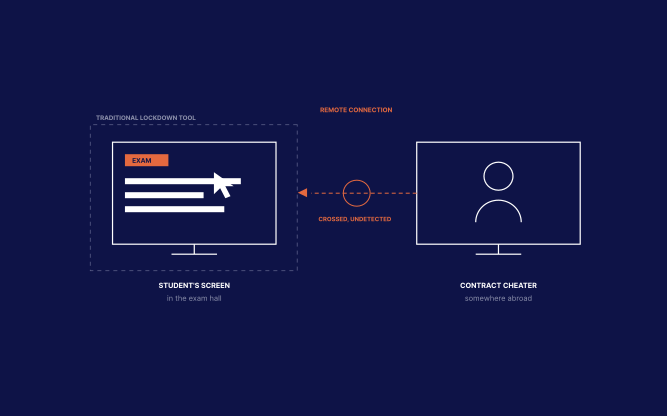
The bypass depended on software being installed on the student's laptop before the secure session started. UQ College moved to Schoolyear, changing the way the exam environment was controlled. When the secure environment launches, other applications are forced to stop, reducing the opportunity for pre-installed software to remain active during the assessment.
The full report covers the replacement process, the four-month implementation timeline and the results from the following three rounds of live testing.
Get the full analysis
This article explains what the lockdown bypass market looks like without naming or linking to the services behind it. We have deliberately withheld those details from the public page to avoid making bypass vendors easier for students to find.
The full report examines
- The vendors behind the market, including the services, pricing models and support they advertise.
- How the four main bypass methods work and which security assumptions they exploit.
- Why common lockdown designs struggle across blocking, verification and response.
- Four questions institutions should ask every exam security vendor.
- Five principles for building stronger protection against current and future bypasses.
Because the report contains named vendors and operational details, we only share it with verified staff at educational institutions.
Use your institutional email address when requesting access. We review each request before sending the report.
Request access to the report
Share this


.avif)