Generative AI has made take-home assignments unreliable evidence of what students can do on their own. The University of Sydney’s two-lane approach responds by securing a few deliberate moments in a program (lane 1) and keeping the rest open for learning with AI (lane 2). Many lane 1 assessments test practical skills, so students often need access to the real software of their discipline. Securing them means controlling which files, websites and AI features students can reach, including inside the applications themselves. Schoolyear secures both knowledge tests and assessments in applications like Excel, Python and RStudio, on students’ own laptops or in a computer lab.
Take-home assignments can no longer reliably tell you what a student can do without assistance. With generative AI, any student can outsource their thinking and doing, and the results can be of high quality.
That’s a big problem, because take-home work has carried a lot of weight in almost any educational institution's assessment strategy for years. When the University of Sydney mapped all assessment in its units in 2024, it counted more than 10,000 unsecured take-home assignments, together making up around 40% of the average unit’s grade.
Now that take-home work is no longer reliable evidence of what a student can do on their own, institutions worldwide are redesigning their assessment strategy. One of the most practical frameworks for that redesign, now being adopted widely, comes from Sydney itself: the two-lane approach.
What is the two-lane approach?
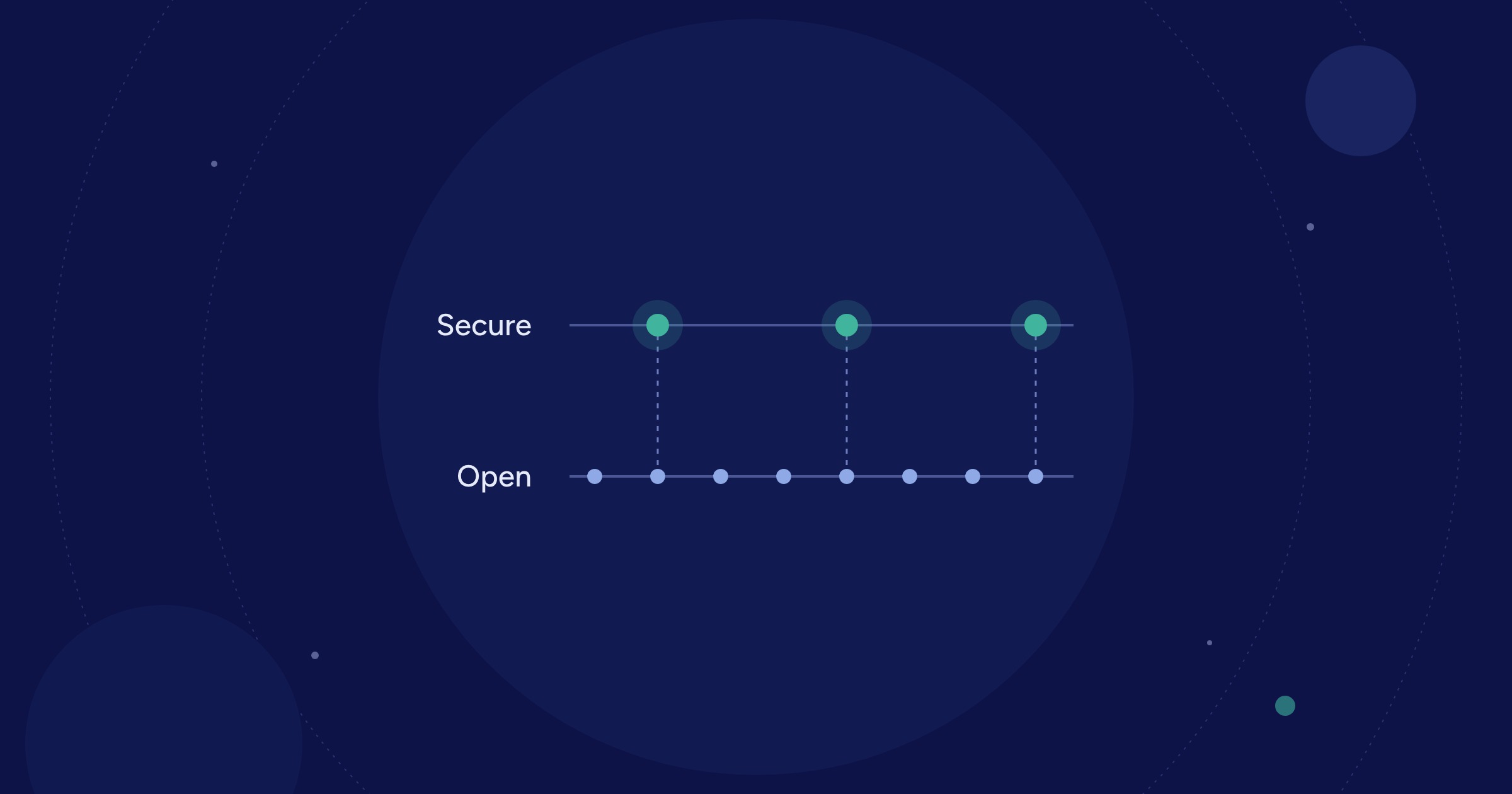
The two-lane approach splits assessment into two lanes: a secured lane where students demonstrate what they have mastered under controlled conditions, and an open lane where they learn, with access to AI where it makes sense. In lane 1, the learning outcome decides which support is allowed, and that can include AI.
The idea behind the approach: you can’t secure every assessment, and you don’t need to. You secure a few deliberate moments in a program and keep the rest open.
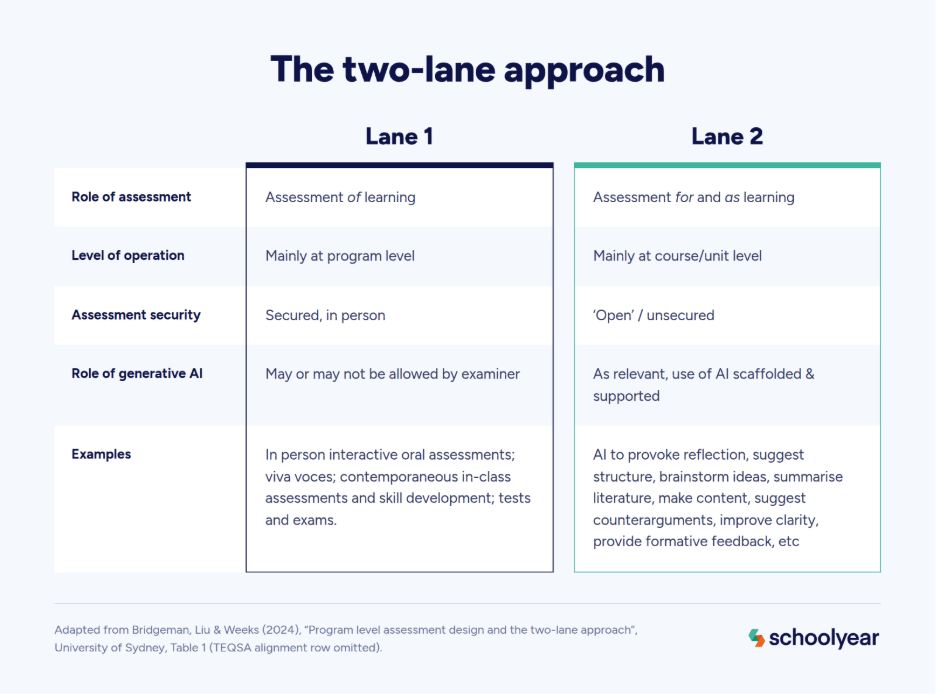
Lane 1 gives you assurance of learning: evidence that a student has met the desired learning outcomes. Lane 2 is where students practice, explore and learn to work with AI. It can still be graded, for instance on the process as well as the product. Security is essential for lane 1 to be trustworthy, but not enough on its own: the tasks also need to fit the learning outcomes and cover them.
How do you run secure assessments at scale?
Traditional exams are secure, but they don’t necessarily give you the assurance of learning you’re looking for. As an engineering educator at a large Australian university recently told us: “In our heart we know that the students who get very good marks in the exam are not always the best engineers.”
Many tasks that used to be take-home assignments test practical skills: building an app, running a simulation, modeling costs in a spreadsheet or analyzing a dataset. That doesn’t mean the whole project has to move to the exam hall. The project can stay open, while you verify the underlying skills under controlled conditions.
During a secured assessment, a student doesn’t necessarily have to rebuild an entire app, for example, but can write a function, adapt existing code and explain their choices. To assess what students can actually do, these tasks require access to the software of their discipline.
Building on Sydney’s framework, a secured assessment in which students work in software needs to be:
- Valid. The task gives appropriate evidence for the learning outcome you want to assure.
- In person and supervised. Sydney is explicit: secured means in person, with the control and supervision needed to restrict supports that aren’t allowed.
- In the right software. Students work in the applications the learning outcome is about, such as Excel, Python or RStudio.
- Controlled access within the software. The examiner decides which files, websites and AI features students can reach, including within the applications themselves.
- Workable at scale. Not a condition for lane 1 as such, but it decides whether you can assess a whole cohort at the same time, with appropriate supervision.
How Schoolyear enables secured lane 1 assessments at scale
Lane 1 assessments often look very different from a traditional closed-book exam. They can be more open, more authentic and more task-based, designed to mirror the real-world workplace. Students work with different types of content and the digital tools of their discipline.
That makes them much harder to secure. Because how do you secure an assessment in which students use several tools, each with its own routes to personal files, the internet and built-in AI?
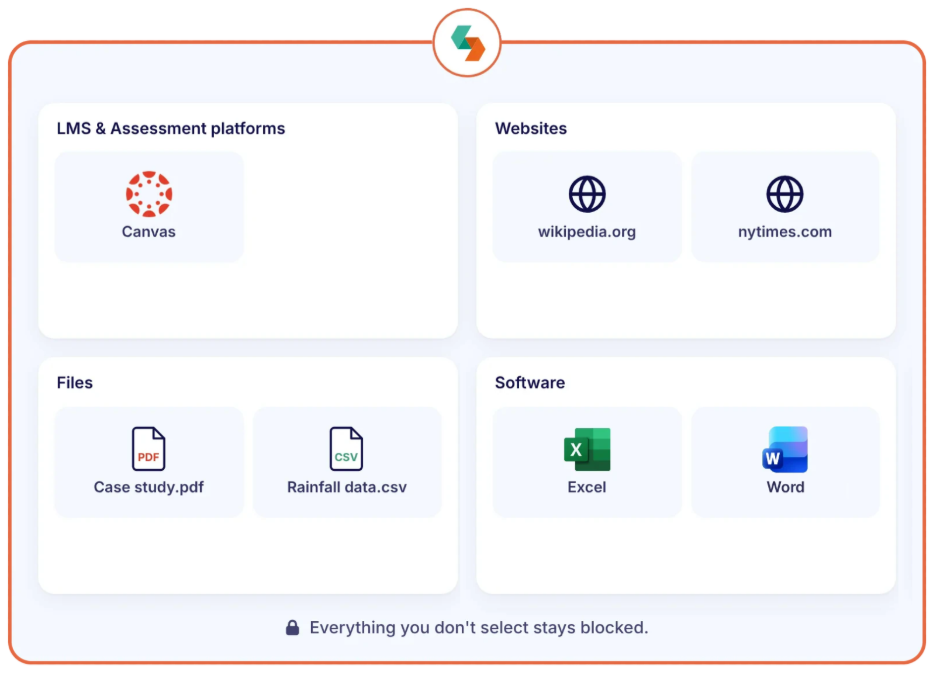
Schoolyear’s controlled assessment workspace solves this. It facilitates both traditional knowledge tests and secure assessments in the applications of a student’s discipline. Applications like Excel or RStudio run in an isolated environment rather than on the student’s laptop. Students get the software they need, without automatic access to their personal files, accounts and settings.
Educators add exactly what an assessment needs: applications like Excel, Word, Python or RStudio, the files and websites the task relies on, and AI if they choose to allow it. Everything else stays out of reach, including unauthorized AI assistants inside applications and unapproved personal files. It works with the LMS or assessment platform the institution already uses, on students’ own laptops or in a computer lab.
At Eindhoven University of Technology, the Department of Industrial Engineering and Innovation Sciences runs secured assessments with Python and RStudio on students’ own laptops. A student might analyze a dataset in RStudio and submit the output, with AI tools and personal files out of reach. They noticed that students who score well on midterms that aren’t AI-proof show a lower passing rate on the secured final exam.
ROC van Twente uses Schoolyear for both traditional knowledge-based exams in its assessment platform Remindo and authentic exams including Word and Excel. In business administration, students pull data from an accounting software tool, analyze it in Excel and report in Word, without access to AI.
See how secure assessments with desktop applications work in Schoolyear→
Share this